
How can you guarantee that you will receive compliments?
It is lovely when someone compliments you on your appearance. You hear, "You look beautiful today," and you are instantly feeling more self-assured or you walk into a certain room and feel pleasantly pleased, or, when shopping, you gravitate toward certain merchandise that you find more appealing than other merchandise.
What is the origin of those situations?
Color is the answer!
The Impact Of Color
Color is a part of every aspect of our lives. Color determinations are made daily, from ensembles and food to interior design and lighting and more, and those directives create profound statements, influence moods, and enhance spaces. In that event, the unparalleled colors are paramount to your well-being.
The C Color® Story
Color theory is a part of the Perception Management field and is brought into play in industries all over the world.
C Color® Founder, Lynette M. Hayde discovered the C Color® Ideology shortly after she hosted a color party for friends years ago. After a Color Consultant draped her guests with fabrics to identify their "seasons," Ms. Hayde observed that her friends never followed the color advice that was imparted.
Ms. Hayde also began to be acutely aware of color and realized that she recognized the nuances in colors that the average individual did not recognize. Within months of this observation, Ms. Hayde understood why previous color theories missed the mark. A person's signature or category of colors is not confirmed by a season or an outward appearance. The inclinations are latent; hence, we embody a color gene within our DNA.
C Color Teaches You To Look Inside For Color

C Color® is the first and only company to quantify intuitive color preferences. Quantifying intuitive color inclinations is the specialty of our lifestyle technology company.
The C Color® Ideology and Methodology will instruct you on how to live life in your color environment.
Most people have an appreciation for colors but are unable to choose the correct hues for their environments or choose colors that are praiseworthy for them to wear. After years of color theory research, consulting, and testing, Ms. Hayde created C Color to aid clients in utilizing the colors within their C Color Spectrums in their daily lives.
The C Color® Theory
There are four C Color Spectrums and every individual is born into one of these categories. The colors in each C Color Spectrum share the same temperature, saturation, and predominant base of one of the primary colors. These three factors are the key to classifying all of the 16.7 million known colors in the world.
All individuals can wear virtually all colors; however, it is significant to wear the colors from within your C Color Spectrum® from the décolletage/chest area upwards. The colors that are not in your C Color Spectrum will not complement your face or complexion, but they can be worn from the chest area downward.
For example, all C Color Spectrums contain the colors of blue, simply not the exact same blues, as there are millions of blues in each C Color Spectrum and millions of blues in general. The temperature, saturation, and predominant base of the color of blue is what differentiates the C Color Spectrum.
It is challenging for most people to notice the nuances in colors, although those differences can intensify or diminish your appearance. At times, the variance between the temperature, saturation, and predominant base of a color can be subtle and, at other times, quite distinctive.
Moreover, people often confuse the temperatures, saturations, and predominant bases of colors. Color analysts, makeup artists, stylists, designers, and most other industry professionals categorize blues, greens, and purples as cool colors and reds, yellows, and oranges as warm colors; nevertheless, all colors can be cool or warm.
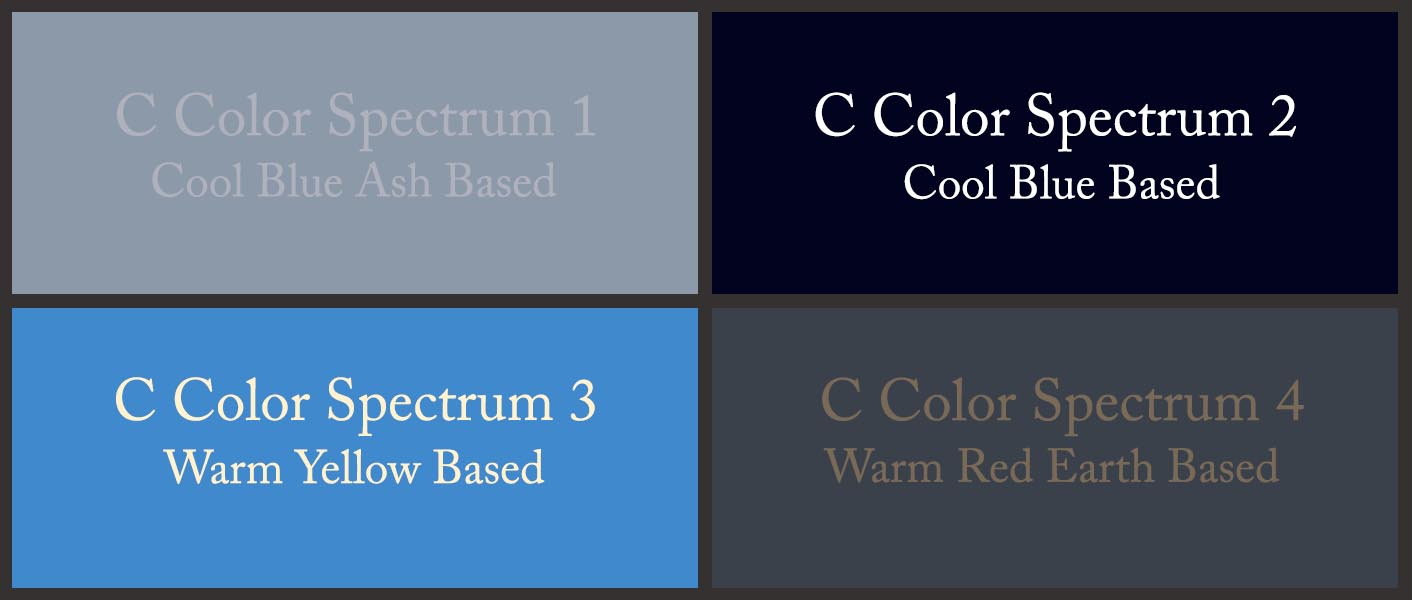
The above color quadrant displays a Cool Blue Ash Based blue color, a Cool Blue Based navy color, a Warm Yellow Based blue color, and a Warm Red Earth Based blue color, as examples to further distinguish the four C Color Spectrums. Each C Color Spectrum® contains millions of every color.
As stated, a color gene is a part of your DNA; consequently, you are born with the virtue of color intelligence. Unlike previous color theories, your C Color Spectrum® has nothing to do with your external appearance. Your C Color Spectrum is authenticated by your penchant for color by means of your color gene.
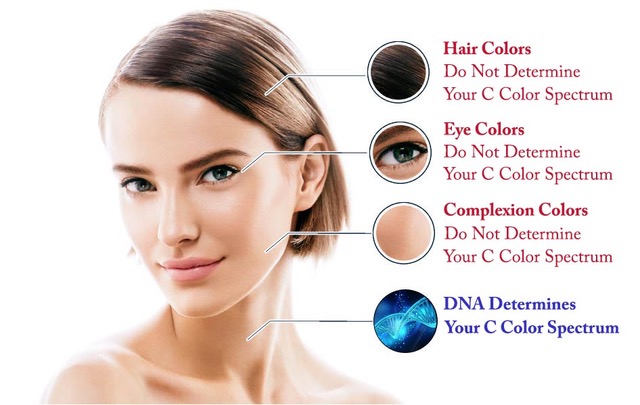
Why It Is Important To Wear The Colors Within Your C Color Spectrum®
Color is a powerful tool that is continually appropriated, despite the fact that we rarely take the time to think about our color judgments. Choosing the unequaled colors can have a monumental impact on your life.
How often do you pause to consider the decisions that you make regarding color, and how do the colors transform your world?
When you wear the colors that comprise your C Color Spectrum, your complexion will appear flawless and glow. In addition to looking your best, you can think, feel, act, learn, and heal your best.
On the other hand, if the colors are not within your C Color Spectrum, then the colors will wear you, which means that others notice the hues, not you, as the colors will drain the life from your skin.
Below is an example of a model in both C Color Spectrum 2, which is predominantly Cool Blue Based, and C Color Spectrum 3, which is predominantly Warm Yellow Based.
Distinctively, when the model is clad in C Color Spectrum 3 colors, she has a flawless and glowing complexion, as the model, in reality, is within the C Color Spectrum 3 category.
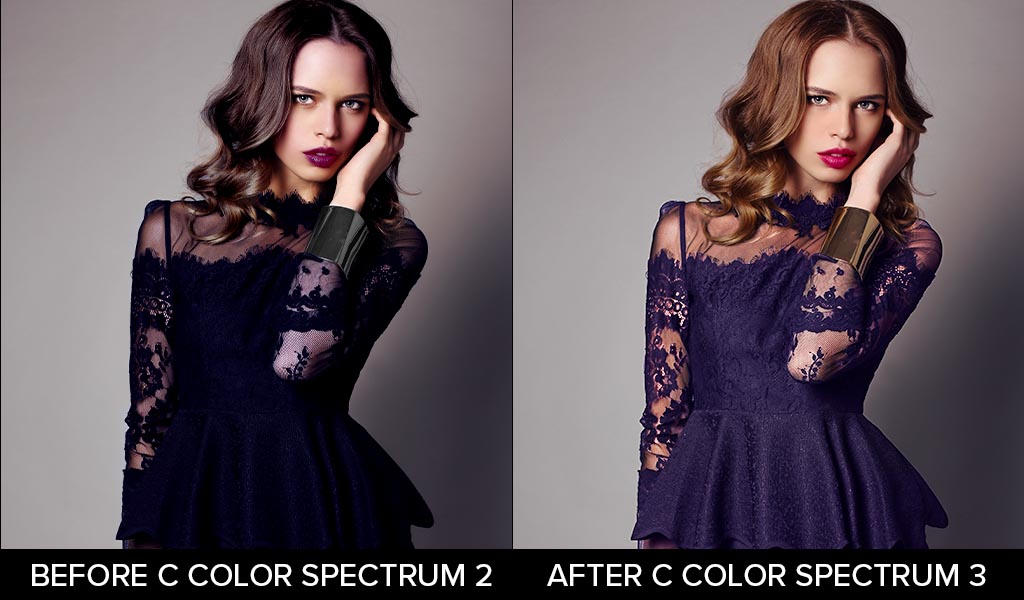 The After Photograph Displays Yellow Based Hair, Makeup, and Dress, Resulting In C Color Spectrum 3
The key to the classification of all colors is the temperature: cool or warm, saturation: less, more, or moderate, and predominant base of a primary color: blue, yellow, or red.
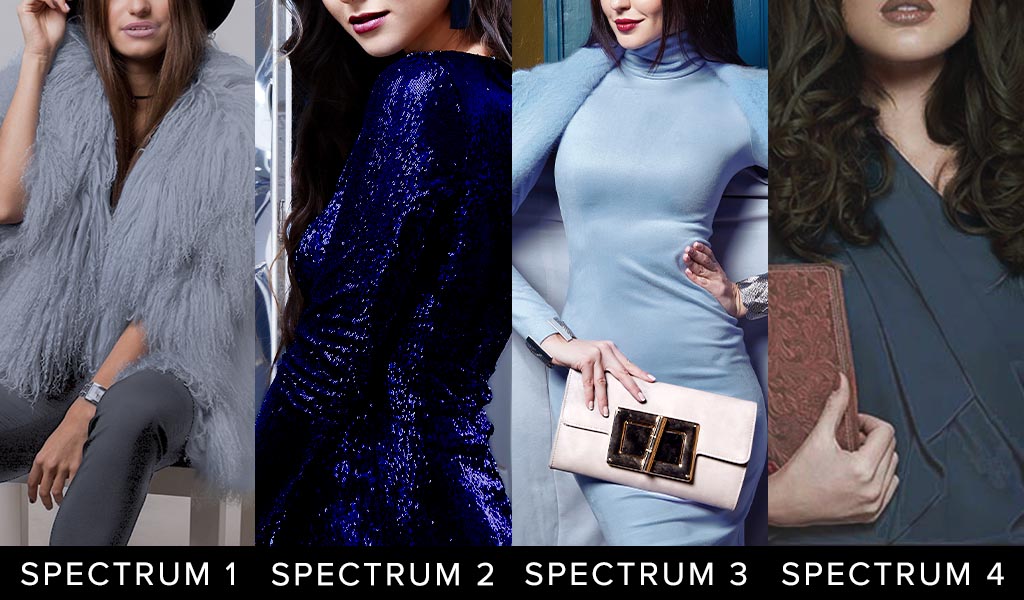
Below is the first example of how individuals from each of the four C Color Spectrums can wear blue colors.
Please note that clothing and accessory colors are for reference only and do not represent the models' C Color Spectrums.
NOTE: THIS COMPOSITE IS BEING UPDATED FOR COLOR ACCURACY
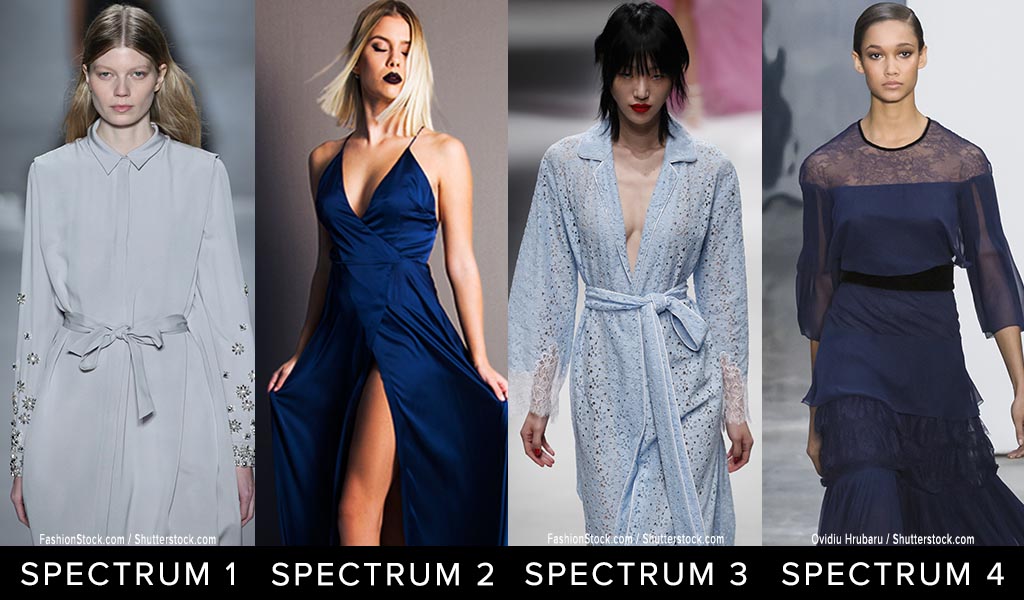
Notice the differences in the four C Color Spectrums:
- C Color Spectrum 1 Blue is Cool Blue Based, Less Saturated, Appears Rubbed with Ash
- C Color Spectrum 2 Blue is Cool Blue Based, More Saturated
- C Color Spectrum 3 Blue is Warm Yellow Based, Moderately Saturated
- C Color Spectrum 4 Navy Blue is Warm Red Based, Less Saturated, Appears Rubbed with Earth
The key to the classification of all colors is the temperature, saturation, and predominant base of one of the primary colors of blue, yellow, or red.
How To Find Your C Color Spectrum®
There are 16.7 million colors in the world, and Carlucci-Hayde has devised an innovative Methodology to verify the color categories, entitled C Color Spectrums®, of clients with a simple C Color Quiz.
The C Color® Quiz establishes your natural desire for color, along with being simple, intuitive, and effective. The objective of the C Color Quiz is to select the color quadrant that you are instinctively drawn toward and that catches your eye, as in doing so, you are following your "inherent color intelligence".
The accurate color results are substantiated by intuitive selections, not thought elections. Thinking about the color options will skew your aftereffect.
Due to this reason, receiving a Personal C Color Analysis differs from all others on the market.
The efficacy of the C Color Quiz is 99.8%. We do not guarantee hundred percent efficacy, as clients may not consistently follow their innate preferences or intuition throughout the C Color Quiz.
Below is the second example of how individuals from each of the four C Color Spectrums can wear blue colors.
Please note that clothing and accessory colors are for reference only and do not represent the models' C Color Spectrums.
Notice the differences in the four C Color Spectrums:
- C Color Spectrum 1 Blue is Cool Blue Based, Less Saturated, Appears Rubbed with Ash
- C Color Spectrum 2 Navy Blue is Cool Blue Based, More Saturated
- C Color Spectrum 3 Blue is Warm Yellow Based, Moderately Saturated
- C Color Spectrum 4 Navy Blue is Warm Red Based, Less Saturated, Appears Rubbed with Earth
The key to the classification of all colors is the temperature, saturation, and predominant base of one of the primary colors of blue, yellow, or red.
Interested in learning more about the C Color Methodology? Peruse our Blog Post: What Are The Four C Color Spectrums And What Do They Mean?
Please be sure to visit the C Color Website.
The refreshed C Color Website includes a plethora of engaging content, simple navigability, and instructive visuals representative of each C Color Spectrum.
C Color® has an online store to further direct you in your endeavor with colors.
Browse the C Color Website and C Color Blog Posts for a colorful experience and inspiration regarding all things color.
Color Is The Bottom Line
The C Color® Methodology is innovative and predicated upon a predetermined color gene within your DNA. Since there are millions of colors to choose from, the C Color system is incomparable in navigating you through the enormous category of hues.
Below is the third example of how individuals from each of the four C Color Spectrums can wear blue colors.
Please note that clothing and accessory colors are for reference only and do not represent the models' C Color Spectrums.
NOTE: THIS COMPOSITE IS BEING UPDATED FOR COLOR ACCURACY
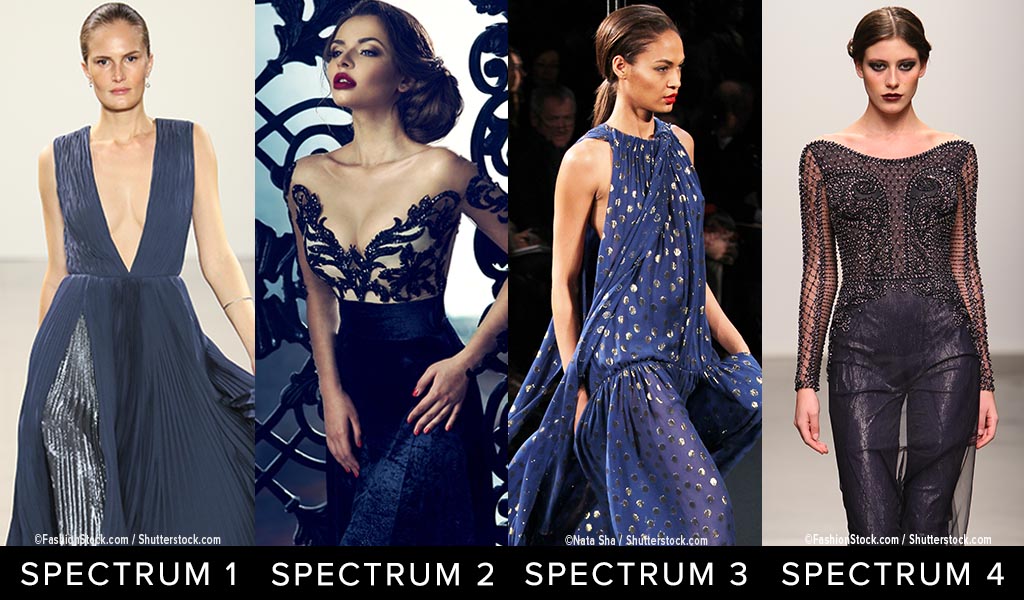
Notice the differences in the four C Color Spectrums:
- C Color Spectrum 1 Blue is Cool Blue Based, Less Saturated, Appears Rubbed with Ash
- C Color Spectrum 2 Blue is Cool Blue Based, More Saturated
- C Color Spectrum 3 Blue is Warm Yellow Based, Moderately Saturated
- C Color Spectrum 4 Blue is Warm Red Based, Less Saturated, Appears Rubbed with Earth
The key to the classification of all colors is the temperature, saturation, and predominant base of one of the primary colors of blue, yellow, or red.
At the end of the day, confidence is the objective. The online C Color® encounter instructs you to embrace color effectively to express yourself in all areas of life. Wearing and surrounding yourself with the superlative colors can enable you to look, think, feel, act, learn, and heal your best.
Begin living life in your optimal colors!
Look and feel prettier or more handsome; experience glowing skin; receive compliments; gain confidence; and garner color confidence.
C Color Gets You There!
Remember: Hair, Eye, and Skin Colors Don't Matter
Socialize With Us